
The Opening
أَعُوذُ بِاللَّهِ مِنَ الشَّيطَانِ الرَّجِيمِ
بسم الله الرحمن الرحيم
I would like to begin this first blog of mine seeking the blessings of Almighty Allah and asking for his protection and guidance as I go about this journey. I ask Allah the Dua which prophet Moses (Musa Alaihi Salam) invoked when he was commissioned to take the message of Tawhid (oneness of Allah) to pharoah (Firoun)
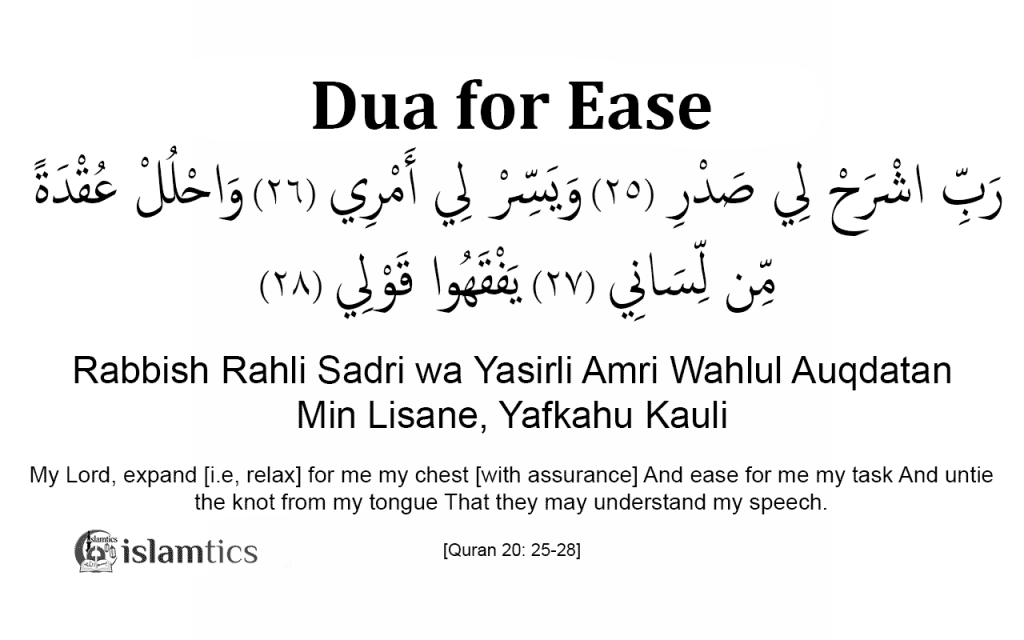
In Sha Allah in this series I aim to look at the tafsir of the Quran part by part and understand the teachings of the Quran and share with you what I learn and what I feel about it. I hope this will benefit me and likewise I hope it benefits you the reader as well to understand the words of our creator. I personally believe by understanding the Quran- (by this i don’t mean to say reading only the translation, but instead understanding the context in which certain verses were revealed and what was the purpose of a certain verse being revealed) we can extract the maximum benefit from each and every verse, because believe me each and every verse has some or the other sort of teaching for us to take and implement in our lives. Sometimes, if you dive deep into an individual word you can end up getting a teaching out of it.
So why’s it important for us to read the Tafsir?
Here, I would like to share a story. So a few weeks ago my father asked me a question… an important one, something that I feel each and everyone should ask themselves. He asked me “What is the Quran?” At first I didn’t understand what he was trying to ask cause he’s a Muslim as well (Alhamdulillah), and I knew he knew what the Quran was as well, so I gave him the standard answer- Word of Allah. He said “I know that, but what is there in the Quran?” Again I was taken aback, but this time not because I didn’t understand the question but because I didn’t have a proper answer, and then I said “ehm… it’s a collection of many things… stories of prophets… and ehm… prayers and warnings given to us by Allah… guidance etc.”. Then he asked me another question which changed everything for me “what is the use of reciting the words of the Creator but not understanding them… you can’t understand the stories, you can’t understand the prayers and warnings and guidance given by your creator to you… so then what’s the use of just recitation?” Don’t get me wrong there is a definite reward for recitation as the prophet Muhammad ﷺ said:
Ibn Mas‘ūd (may Allah be pleased with him)reported that the Messenger of Allah (may Allah’s peace and blessings be upon him) said: “Whoever recites a letter from the Book of Allah will be credited with a good deed, and the good deed receives a ten-fold reward. I am not saying that “ألم” Alif-Lām-Mīm is one letter, but Alif is a letter, Lām is a letter and Mīm is a letter.”
Sahih/Authentic. – [At-Tirmidhi]
But remember that Allah says in Chapter 38 verse 29:
كِتَـٰبٌ أَنزَلْنَـٰهُ إِلَيْكَ مُبَـٰرَكٌۭ لِّيَدَّبَّرُوٓا۟ ءَايَـٰتِهِۦ
وَلِيَتَذَكَّرَ أُو۟لُوا۟ ٱلْأَلْبَـٰبِ
[This is] a blessed Book which We have revealed to you, [O Muhammad], that they might reflect upon its verses and that those of understanding would be reminded.
So we can consider it as a command from our lord to understand and contemplate the verses of the Quran.
In the name of Allah The Most Gracious, The Most Merciful
The plan for this blog is to briefly touch upon the Introduction to Surah Al-Fatiha InShaAllah.
The first thing Tafsir students look at when beginning a Surah is whether the Surah is Makki (revealed in Makkah) or Madani (revealed in Madinah). Establishing this info helps us understand if the Surah was revealed before the hijrah of Prophet Muhammad ﷺ or after, there are also certain themes associated with Makki and Madani Surahs such as
In Makki Surahs most of the confrontation is against idolaters while in Madani Surahs it is against thePeople of the Book and hypocrites.
this is just one of the themes, if you are interested to read more in detail here is a link to a page explaining the differences between Makki and Madani Surahs
It is well known that there are 114 Surahs in the Quran but did you know that of the 114, 86 are Makki and 28 are Madani.
Well, the Surah we are going to be looking at today (Surah Al-Fatiha) is a Makki Surah i.e. it was revealed before the hijrah of Prophet Muhammad ﷺ in Makkah.
Next, let’s look at the meaning of Al-Fatiha, Al-Fatiha literally translates to ‘THE OPENING’ which denotes that it is the ‘opener of the Book’, it is the Surah with which the prayers (salah) are opened/begun.
Were you aware that Surah Fatiha has various other names as well? For example it is called ‘Umm Al-Kitab’ (The Mother of The Book). now the question arises, from where do we get this name?
Well, in an authentic hadith recorded by At- Tirmidhi (who graded the hadith as Sahih)
Abu Hurayrah said that the Messenger of Allah ﷺ said,
«الْحَمْدُ للهِ رَبِّ الْعَالَمِينَ أُمُّ الْقُرْآنِ وَأُمُّ الْكِتَابِ وَالسَّبْعُ الْمَثَانِي وَالْقُرْآنُ الْعَظِيمُ»
(Al-Hamdu lillahi Rabbil-`Alamin is the Mother of the Qur’an, the Mother of the Book, and the seven repeated Ayat of the Glorious Qur’an.)
Another question that may arise is Why is the Surah referred to as Umm Al- Kitab?
There are 2 explanations for this:
- The first is a statement from Imaam Al-Bukhari, in the beginning of the book of Tafsir in his Sahih he mentions
“it is called Umm Al-Kitab because the Quran starts with it and because the prayer is started by reciting it”
- The second explanation is that it is call Umm Al-Kitab because it contains the meaning of the entire Quran. Ibn Jarir said
“the arabs call every comprehensive matter that contains several specific areas as Umm. For instance they call the skin that surrounds the brain ‘Umm Ar-Ra’s’ (mother of head). They also call the flag that gathers the ranks of army as Umm.”
He also said
“Makkah was called ‘Umm Al-Qura’ (mother of villages) because it was the the grandest and leader of all villages.
Now, let’s move on to the next couple of names: ‘Al-Hamd’ and ‘As-Salah’
The reason for it being called Al-Hamd, we get from the following hadith
The Prophet ﷺ said that Allah said that Allah said
رَسُولَ اللَّهِ صلى الله عليه وسلم يَقُولُ ” قَالَ اللَّهُ تَعَالَى قَسَمْتُ الصَّلاَةَ بَيْنِي وَبَيْنَ عَبْدِي نِصْفَيْنِ وَلِعَبْدِي مَا سَأَلَ فَإِذَا قَالَ الْعَبْدُ { الْحَمْدُ لِلَّهِ رَبِّ الْعَالَمِينَ} . قَالَ اللَّهُ تَعَالَى حَمِدَنِي عَبْدِي
Allah the Exalted had said: I have divided the prayer into two halves between Me and My servant, and My servant will receive what he asks. When the servant says: Praise be to Allah, the Lord of the universe, Allah the Most High says: My servant has praised Me.
Now coming to ’As-Salah’, some of you may know that Salah means prayer… then how come Surah Al-Fatiha is called As-Salah?
The answer for this is, it is called As-Salah, because reciting it is a condition for the correctness of the Salah (prayer)
Coming to the last two name of Surah Fatiha we will discuss in this blog, they are ‘Ash-Shifa’ which means ‘THE CURE’ and ‘Ar-Ruqyah’ which means ‘THE REMEDY’
The reasons for the above mentioned names will be discussed in the upcoming blogs InShaAllah.
The last thing I want to discuss in this blog is a bit of maths… i.e. number of aayahs, letters and words in this Surah.
There is no disagreement over the view that Al-Fatiha contains 7 Ayat. According to majority of scholars Bismillah is a seperate Ayah in the beginning.
The scholars say that Al-Fatiha consists of 25 words and 113 letters
I believe this blog is already too long and I don’t want to burden you with more info for this week. InShaAllah next week we will continue with the tafsir of Surah Fatiha and there are few very interesting topics I want to discuss in next week’s blog, so keep an eye out for that.
I will inform you guys when i publish a new blog through my socials so go follow me on Instagram and Twitter
Instagram: https://instagram.com/ila.aljannah?igshid=NTc4MTIwNjQ2YQ==
Twitter: https://twitter.com/ilaaljannah123/status/1646592142263955456?s=46
Hope you were able to learn something new today, until next time ASSALAMU ALAIKUM
 Ila Al Jannah family